From Ballerina to Billionaire – The Story of Kalshi’s Cofounder
Luana Lopes Lara’s rise to billionaire status didn’t begin in a boardroom. It started in a dance studio filled with fierce competition and unwavering discipline. Long before she co-founded Kalshi, now valued at $11 billion, Lopes Lara spent her teenage years perfecting ballet at Brazil’s prestigious Bolshoi Theater School. Her teachers demanded perfection. They pushed her to hold her leg high, sometimes testing endurance with a lit cigarette beneath it. That intensity shaped the grit she would later carry into the business world.
Her classmates competed as hard as athletes. Some even hid glass shards in each other’s shoes to gain an advantage. Each day, she spent half in academic classes and half in ballet training, leaving little time for rest. Still, her drive went beyond the stage. Encouraged by her math teacher mother and electrical engineer father, she studied late into the night to compete in academic Olympiads. She earned gold in the Brazilian Astronomy Olympiad and bronze in the Santa Catarina Mathematics Olympiad.
Even then, her sights were set higher than the spotlight. She dreamed of building something revolutionary, something that would merge intellect, innovation, and impact.
From Ballet to MIT and Beyond
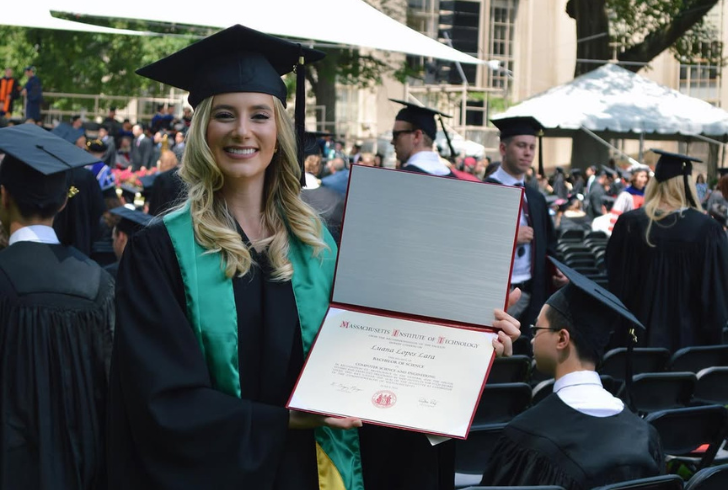
Instagram | @luana_lopes_lara | Lopes Lara combined her dance discipline with MIT skills to master global markets.
After graduating high school, Lopes Lara danced professionally in Austria for nearly a year. Yet, her ambitions soon pointed elsewhere. She traded her pointe shoes for a laptop and enrolled at the Massachusetts Institute of Technology (MIT), where she studied computer science. Her time at MIT would prove transformative.
During her college years, she interned at Bridgewater Associates, founded by Ray Dalio, and at Ken Griffin’s Citadel Securities. Both firms are known for their analytical rigor and high-stakes environments, perfect training grounds for someone who thrived on challenge. These experiences sharpened her understanding of global markets and helped her see opportunities others overlooked.
Her partner in that discovery was Tarek Mansour, a fellow MIT student from Lebanon. Both majored in computer science, shared an international student group, and bonded over curiosity about how markets respond to future events. Mansour, who grew up through Lebanon’s 2007 conflict, admired Lopes Lara’s focus and determination. He noticed she always sat in the front row, asking sharp questions and never backing down.
The Spark That Ignited Kalshi
The idea that would change their lives came during evening walks home from their New York internships at Five Rings Capital in 2018. They discussed how traders often make decisions based on predictions about elections, weather, or global events. What if there was a way to directly trade on those predictions instead of doing it indirectly through traditional markets?
That question became the seed for Kalshi, a platform where users could legally trade on the outcomes of future events, from political elections to sports results and pop culture moments.
With a clear vision, the duo applied to Y Combinator in 2019 and got accepted. But their biggest challenge wasn’t technological, it was legal. Prediction markets had murky regulations in the United States. Most law firms refused to help two young founders with no track record. They reached out to more than 40 firms, but every door closed.
The Battle for Legitimacy

Instagram | realamericaland | Despite global crises and zero revenue, Kalshi’s founders spent two years coding toward survival.
Persistence became their defining strength. After months of rejections, one expert finally believed in them, Jeff Bandman, a former executive at the Commodity Futures Trading Commission (CFTC). With his guidance, they began the long process of applying for federal approval.
It wasn’t easy. For nearly two years, Kalshi had no product, no revenue, and no guarantee of survival. Lopes Lara worked from London during the pandemic, while Mansour operated from Beirut, even through the 2020 port explosion that devastated the city. He spent days helping his neighborhood recover and nights coding for Kalshi.
Their patience paid off in November 2020 when the CFTC officially approved Kalshi as a Designated Contract Market. This status allowed it to legally operate as an events-based financial exchange. The milestone marked a first-of-its-kind moment in modern financial history, and set Kalshi apart from blockchain-based rivals like Polymarket, which had faced fines for unregistered operations.
Billion-Dollar Momentum
By 2024, Kalshi’s growth was unstoppable. Its valuation skyrocketed from $2 billion in June to $11 billion by year’s end, with major investments from Paradigm, Sequoia Capital, Andreessen Horowitz, and Y Combinator. Each cofounder’s stake rose to roughly $1.3 billion, officially making them billionaires at just 29 years old.
Ali Partovi, CEO of Neo, one of Kalshi’s earliest backers, explained the excitement: “Now that Kalshi has proven its potential, everyone wants in.” Notional trading volume jumped eightfold, reaching nearly $6 billion in November 2024. Polymarket, its main competitor, also saw growth, but Kalshi’s regulated status gave it an undeniable edge.
Kalshi’s defining moment came when it fought, and won, against the very regulator that had once approved it. In 2023, when the CFTC rejected its request to list election-based contracts, Lopes Lara led the charge to sue the agency. Many investors warned against it, fearing backlash. But she refused to step back.
In September 2024, a federal judge ruled in favor of Kalshi. The company became the first in more than a century to legally offer election markets in the United States. During the presidential race, users traded over $500 million on outcomes and accurately predicted the winner.
Scaling Kalshi to New Heights
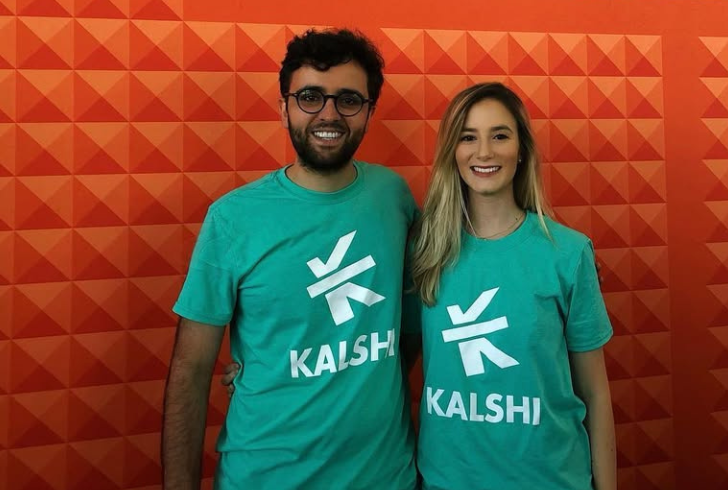
Instagram | @luana_lopes_lara | Lopes Lara and Mansour turn bold ideas and hard work into a company that reshapes markets.
Following its landmark election contracts, Kalshi didn’t slow down. Its weekly trading volume surpassed $1 billion, an astonishing 1000% increase from the previous year. The platform expanded partnerships with major brokerages such as Robinhood and Webull, linking event trading with mainstream investing.
New collaborations with the National Hockey League, Google Finance, and online marketplace StockX signaled its move toward broader markets. Even Donald Trump Jr. joined Kalshi’s advisory board in January 2025, adding a recognizable face to its strategic direction.
Kalshi also entered the blockchain space, bringing its event markets to Solana to compete with Polymarket. The company aims to use its new funding to deepen integrations and build partnerships with media outlets and global exchanges.
Still, challenges remain. Over 90% of Kalshi’s current trading involves sports, drawing scrutiny from state regulators who argue these contracts resemble gambling. Yet, Kalshi’s federal designation keeps it in a unique position, one that blurs lines between innovation and policy. Investors remain confident that the founders’ tenacity will guide them through this next phase.
Leadership Built on Grit and Grace
Lopes Lara’s leadership is marked by calm under pressure and unwavering resilience. Her early training as a professional ballerina instilled discipline and precision, traits she now applies to guiding Kalshi.
Kalshi’s journey isn’t just about technology—it’s about persistence, bold decision-making, and turning setbacks into opportunities. From ballet studios in Brazil to MIT classrooms and billion-dollar boardrooms, Lopes Lara transformed her dedication into strategic success.
Today, Kalshi stands as more than a trading platform; it reshapes how people engage with prediction and probability. Under the leadership of Lopes Lara and Mansour, the company exemplifies disciplined innovation, proving that intelligence, courage, and hard work can shape markets and inspire change.
From ballet shoes to billion-dollar deals, Lopes Lara’s story shows that vision grows through purpose, persistence, and precision, inspiring a new generation to turn challenges into triumphs.